
FALL 2025

WELCOME NOTE | 10.25
It has been nothing but sun-dappled and lovely in Colorado this past month. Known for freak hail storms and abrupt shifts in temperature, we have been basking in this long, steady fall and the accompanying weather.
In this issue, we will walk you through a first look at the Campo Compound, my family’s home and test garden, and our collaboration with photographer Trent Davis Bailey. We will also do a topical deep dive into WEEDS and the various strategies we deploy to deal with them. And we will close with a leisurely trip to California to explore Lotusland.
Thanks for the read,
Cali
HOME BASE | 8.25
Campo Compound
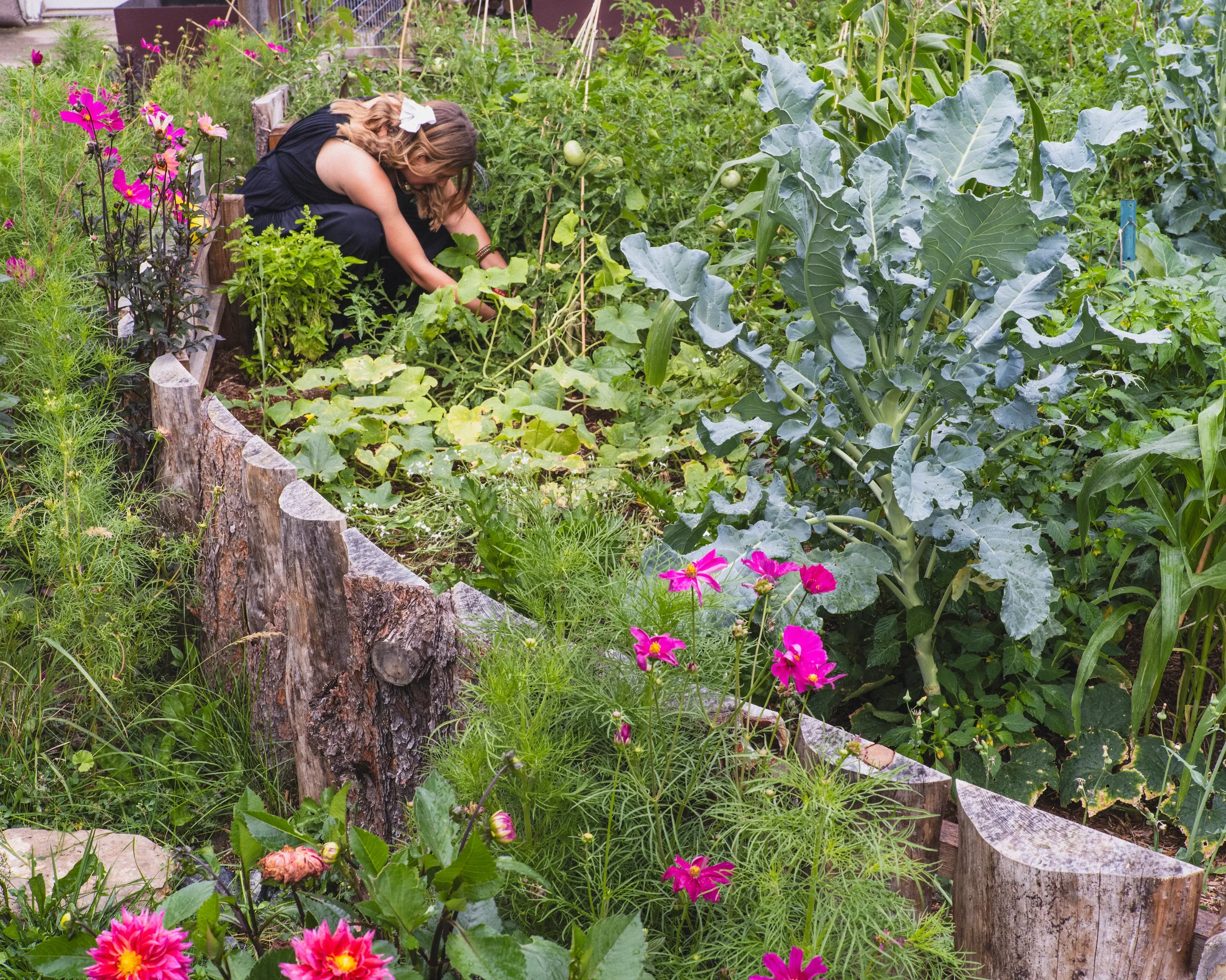
A first look at our half-acre homestead in Denver is now posted on our website. It feels a little daunting to share it as it is still very much evolving but we are grateful to have the room to experiment and to test the bounds of wildness in a residential landscape at home. Like other designers I know, I went in with ideas for this garden but not a firm plan. It has been liberating.
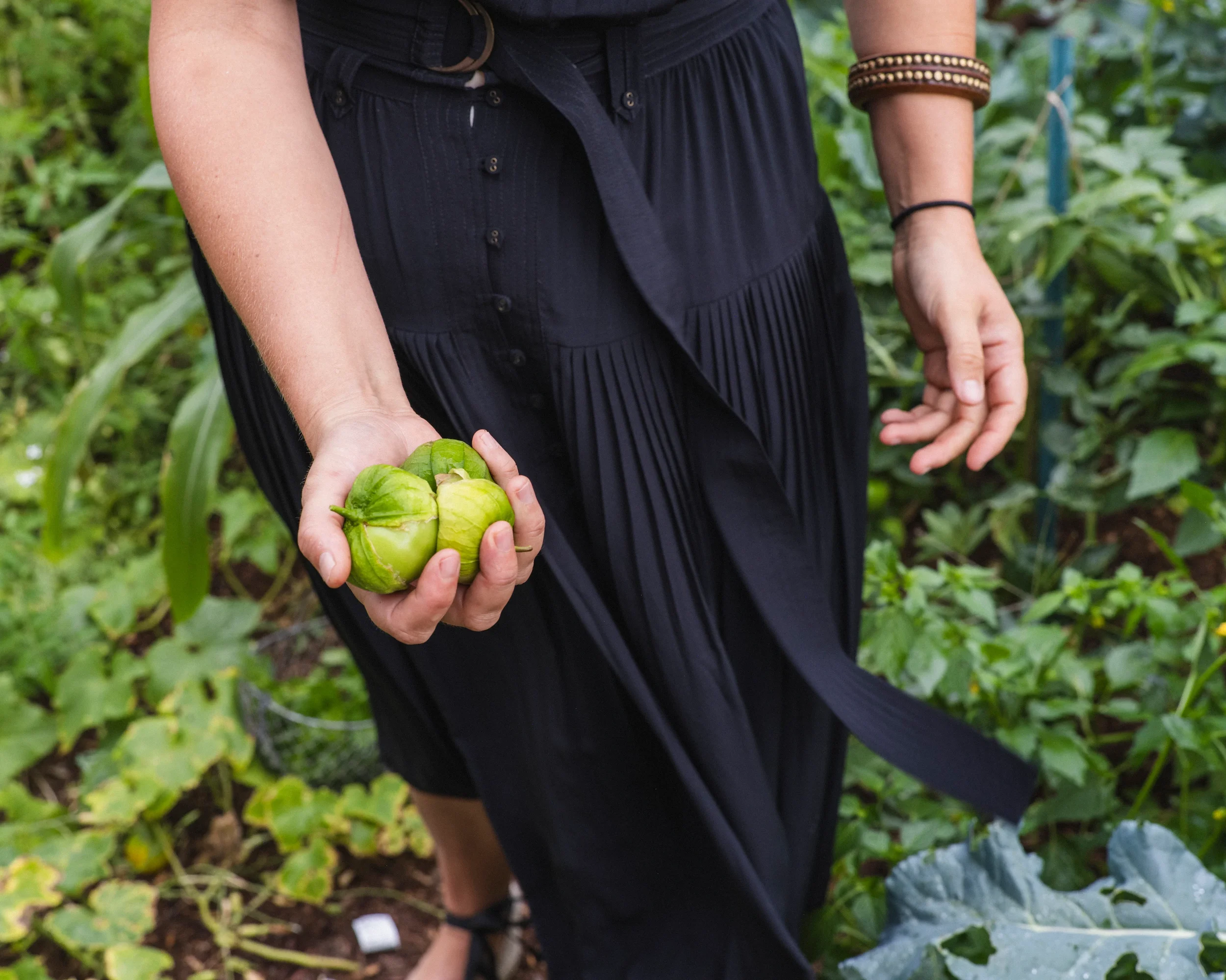
We partnered with photographer (and my childhood friend), Trent Davis Bailey, who is chronicling this and other gardens for us over the next couple of years. His work is beautiful. We did this as an artist’s exchange: photography for landscape design. We look forward to sharing the design of Trent and his family’s magical property in Evergreen, Colorado in the coming years. One of the best parts of running a business is serendipitous exchanges like this and partnering with other creatives, whose work inspires us and fills our cup.
Here are some of Trent’s photos of the compound so far:

NOXIOUS | 9.25
Topical Deep Dive: WEEDS
WEEDS. This is a thorny topic not only in how we approach weeds but also how we define them. Broadly speaking, a weed is a plant that is unwanted in a particular context. This may be because it outcompetes desirable plants or because it has long-lived seeds that return each year. A farmer may differ from an ecologist in what they consider to be a weed and some academics question the validity of calling plant species ‘weeds’ or ‘native’ or ‘invasive’ in a globalized world where soil, plants, and water are often imported. For me, controlling weeds is really about allowing for complexity and heterogeneity in planting, and fostering an environment where less aggressive species can find a niche and thrive.
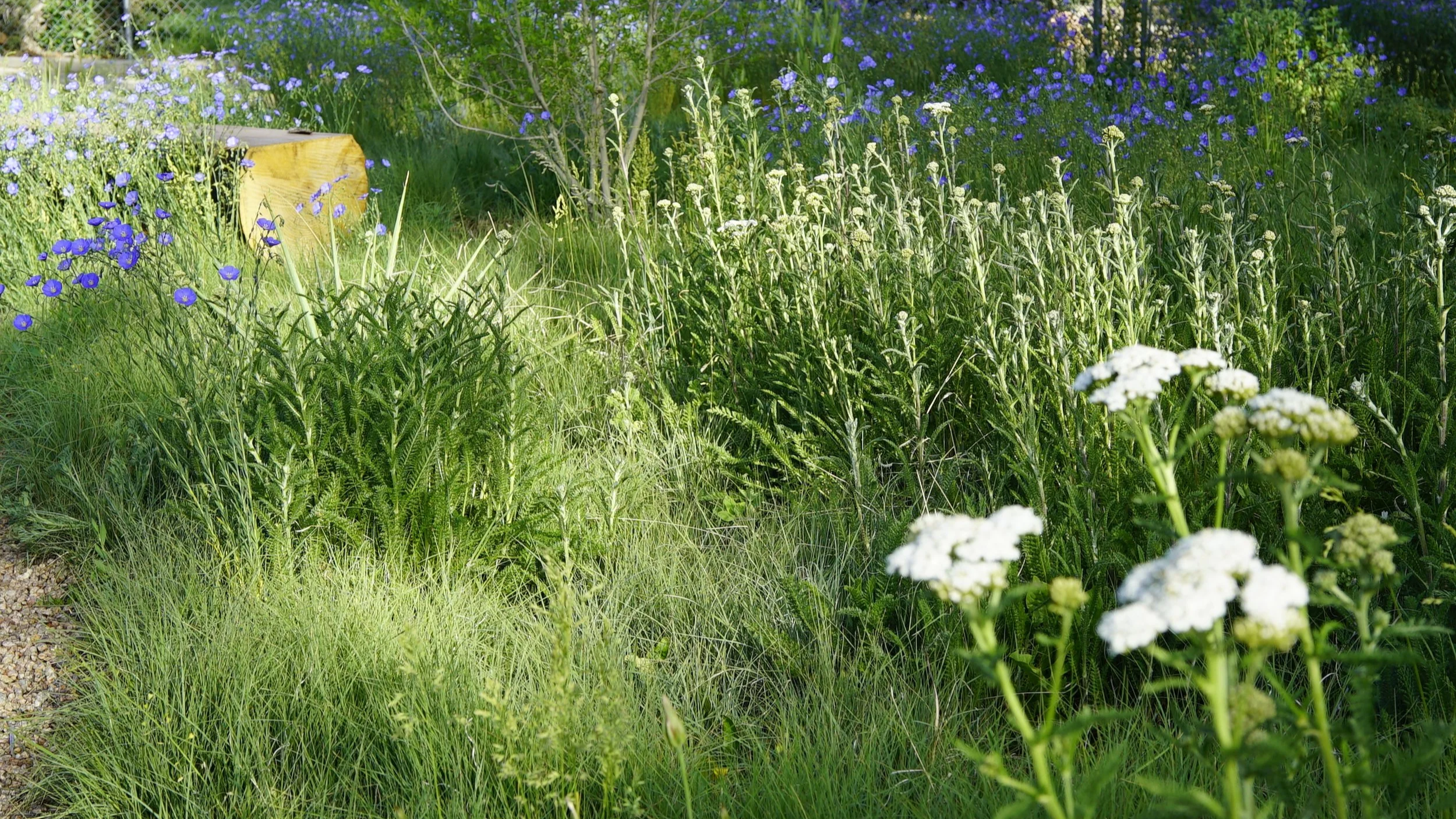
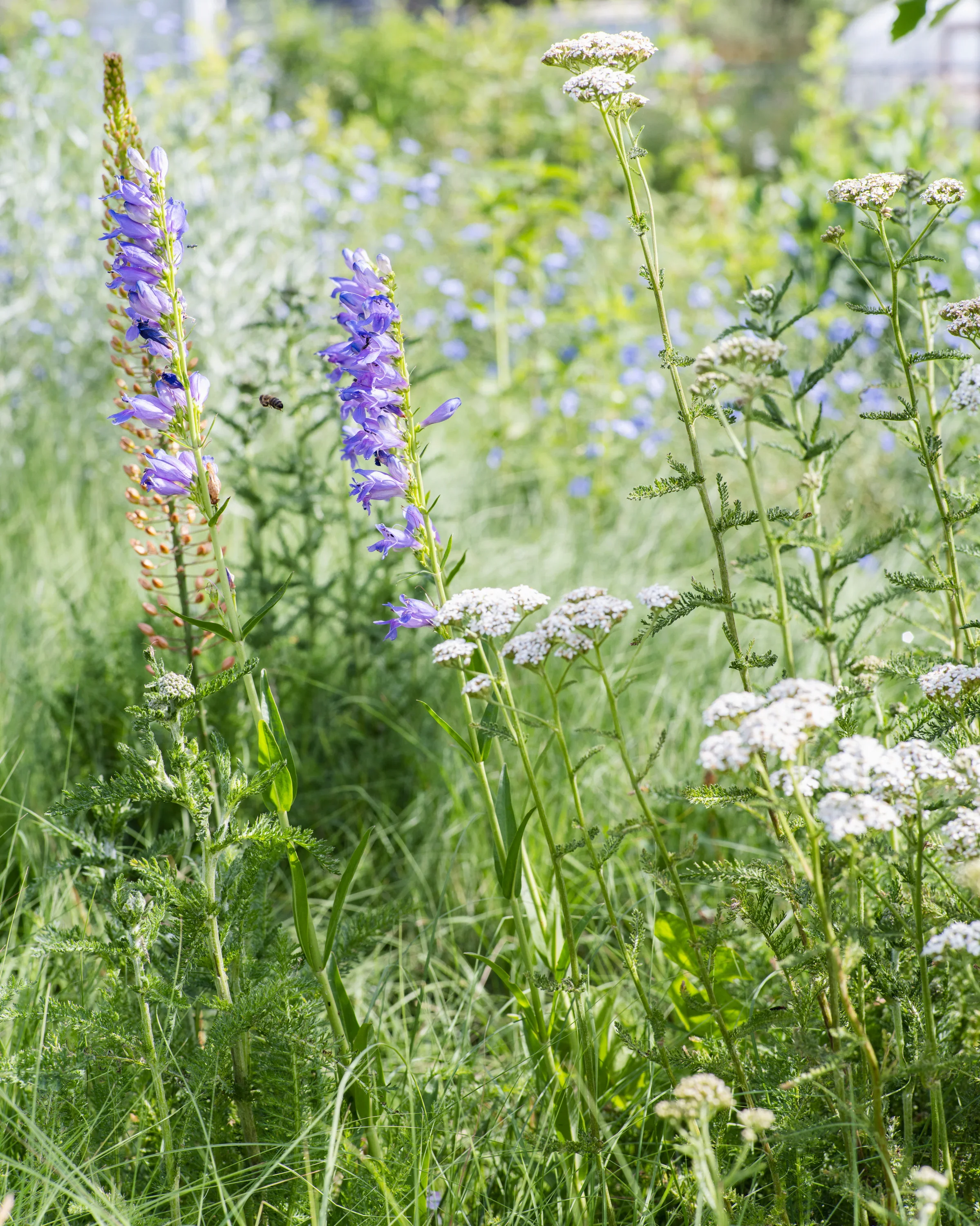
Photo of the meadow planting at Campo Compound that was manually weeded for two summers while establishing
EVALUATE THE SITE: Looking at the existing conditions is a necessary first step: if on a larger property, I like to divide the property into habitat zones (woodland, grassland, hay field, etc) and study composition. For a forest, is it regenerating naturally? Are there mixed age groups of each tree species? Does the understory match the habitat type? Where are the invasive species most present? How healthy is the soil? All of these questions will provide insight on the severity of weed pressure and what strategies will be most effective.
DEFINE YOUR GOALS: Weeds are often most pernicious in monocultures (lawns, field crops, vineyards, orchards) because these landscapes lack the structure and species diversity that help an intact ecosystem self regulate. As such, they require human intervention to maintain their structure. This is neither good or bad but I do think it is worth evaluating. A farmer may deploy certain strategies to protect their crops and livelihood, while an ecologist will use others to restore a woodland. Both have a lot at stake. So what is the goal of your weed mitigation? Is it for the health of the plants? To restore an ecosystem? To maintain a sense of tidiness? To reduce maintenance? Diverse ecosystems have more natural defenses against weeds and disease so evaluate if there are areas where you can introduce diverse plantings in place of weedy or one dimensional ones.
KNOW YOUR ENEMY: For garden weeding, I take a similar strategy to mushrooming: only harvest what you know. There are 3-5 weeds in most regions that just bad news and I focus in on those. This also requires a degree of acceptance of self seeders and errant diversity.
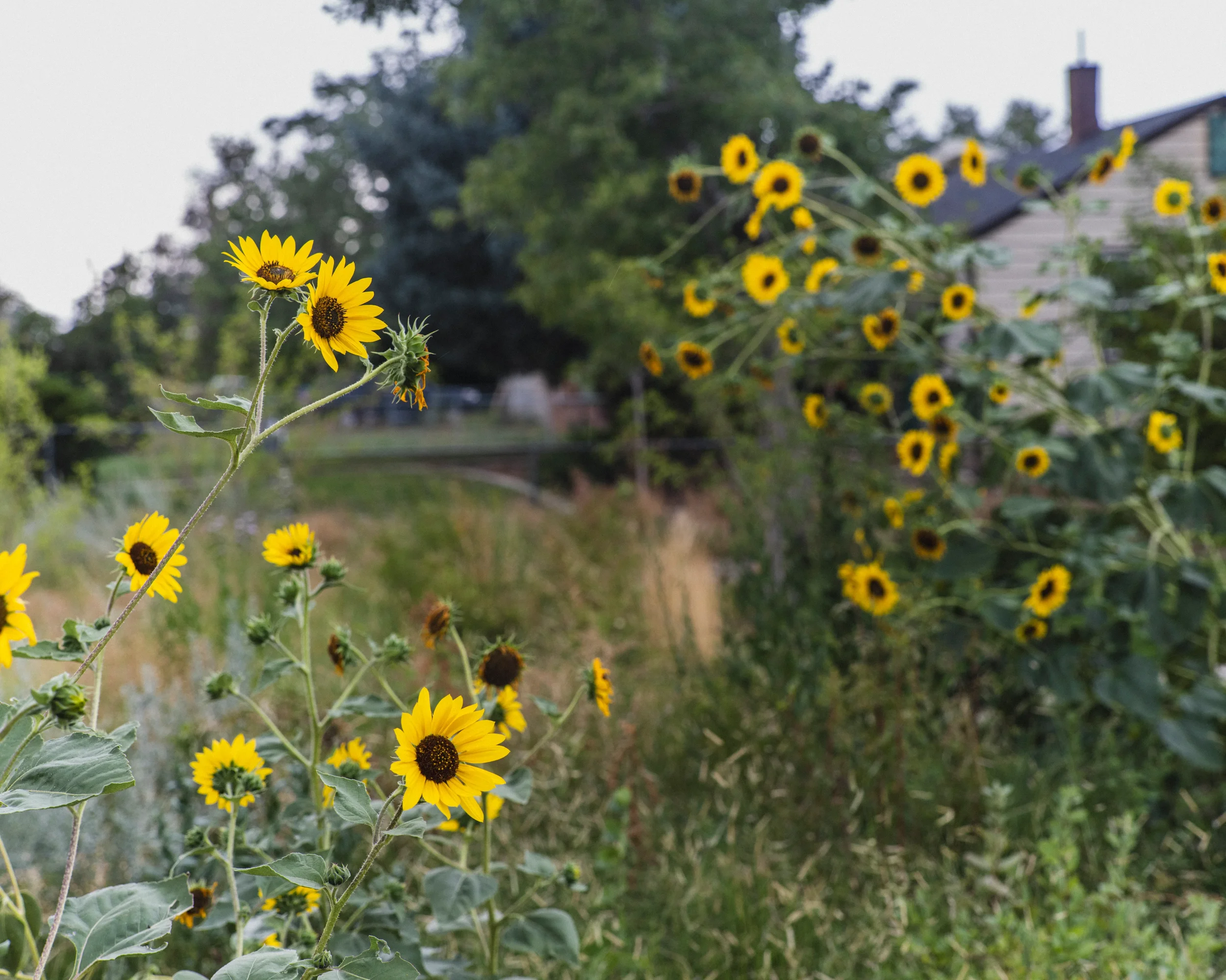
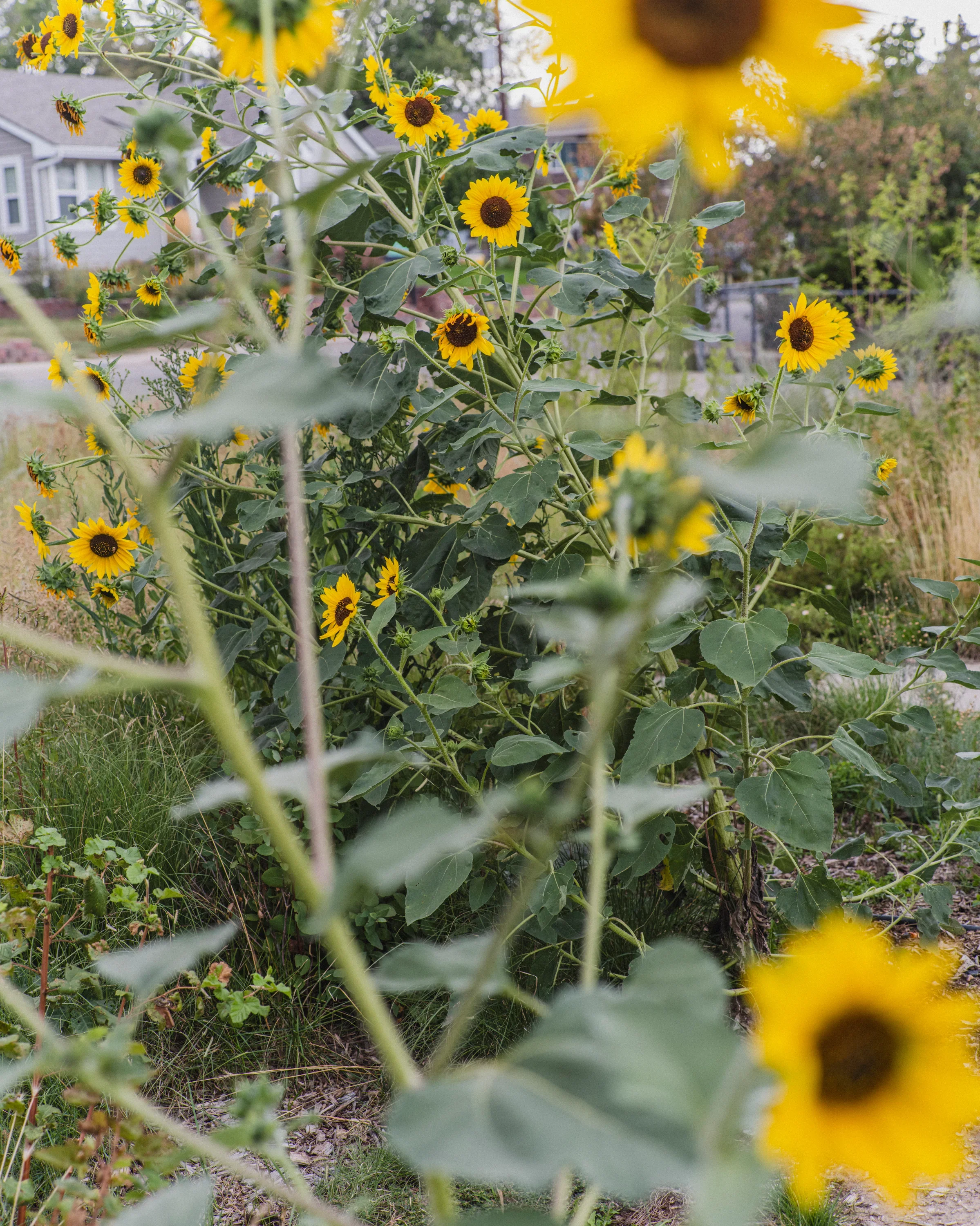
Weed or vessel of joy? These native sunflowers, Helianthus annuus, self-seeded in the margins of our meadow. Tolerating spontaneity in the garden is also a form of weed management. Photo by Trent Davis Bailey
CHOOSE YOUR SWORD: Based on your situation and your goals, there are a number of weed mitigation strategies to take, including:
Chemical treatments—natural and synthetic chemical treatments work well on heavily weed-loaded sites as well as large properties or wilderness areas. In our work with NRCS and US Fish and Wildlife, chemical treatments are often the preferred method for weed control to ensure that native plants have a fighting chance at establishing. This is especially common for meadow and grassland establishment. It is up to you to determine what kinds of treatments or methods you feel comfortable using on your property.
Mechanical removal—for invasive trees and shrubs, mechanical removal—including mulching and bush hogging—is often required. Mowing and sod removal are also considered mechanical removal. For the unintiated, mechanical removal can look very violent (it is) as whole trees are crushed, uprooted, and mulched. This however is often what is needed to restore a natural ecosystem at scale. One method we advise against is tilling. I did this in my own garden to avoid chemically treating the area when I had a newborn and it took years to manually remove the weeds exposed while tilling. It also damages soil structure. If you do till, a few cycles of irrigating the bare soil and mowing the weeds near the root before the flower forms will reduce weed vigor.
Smothering—for smaller sites, there are a number of smothering strategies, including lasagna mulching, solarizing, paper or cardboard barriers, and wood chip, bark or gravel mulch. Inorganic weed barriers are also commonly used in the landscaping industry; we advise against these due to their negative impacts on soil health, leaching of plastics, and because long-term, they rarely work. Our preferred method is green mulching, which uses dense planting of groundcovers and shade tolerant grasses, like sedges, as an understory or matrix. (Look up matrix planting and the work of Phyto Studio for more info on this). This method leaves little room for weeds to grow.
PLANT FOR MAINTENANCE: Lastly, plant for your climate, be it native or adaptive. Weeds are often the byproduct of other forms of maintenance, like irrigation and fertilizing. Cutting back supplemental irrigation can curb weed pressure in dry climates. If you plant densely and water only when needed (after establishment), you will have less weed pressure long-term. For ornamental gardens, we have found gravel and sand gardens to be very effective at mitigating weeds from the start, as they have a hard time establishing in 4” of rock. Again look at your local environment: if native areas have rock (what kind?) or wood mulch in the understory, then plant and mulch similarly.
If this sparks thoughts, feel free to email me at cali at studio-campo.com. Would love to hear what has worked (or not worked) for you.
LA LA | 10.25
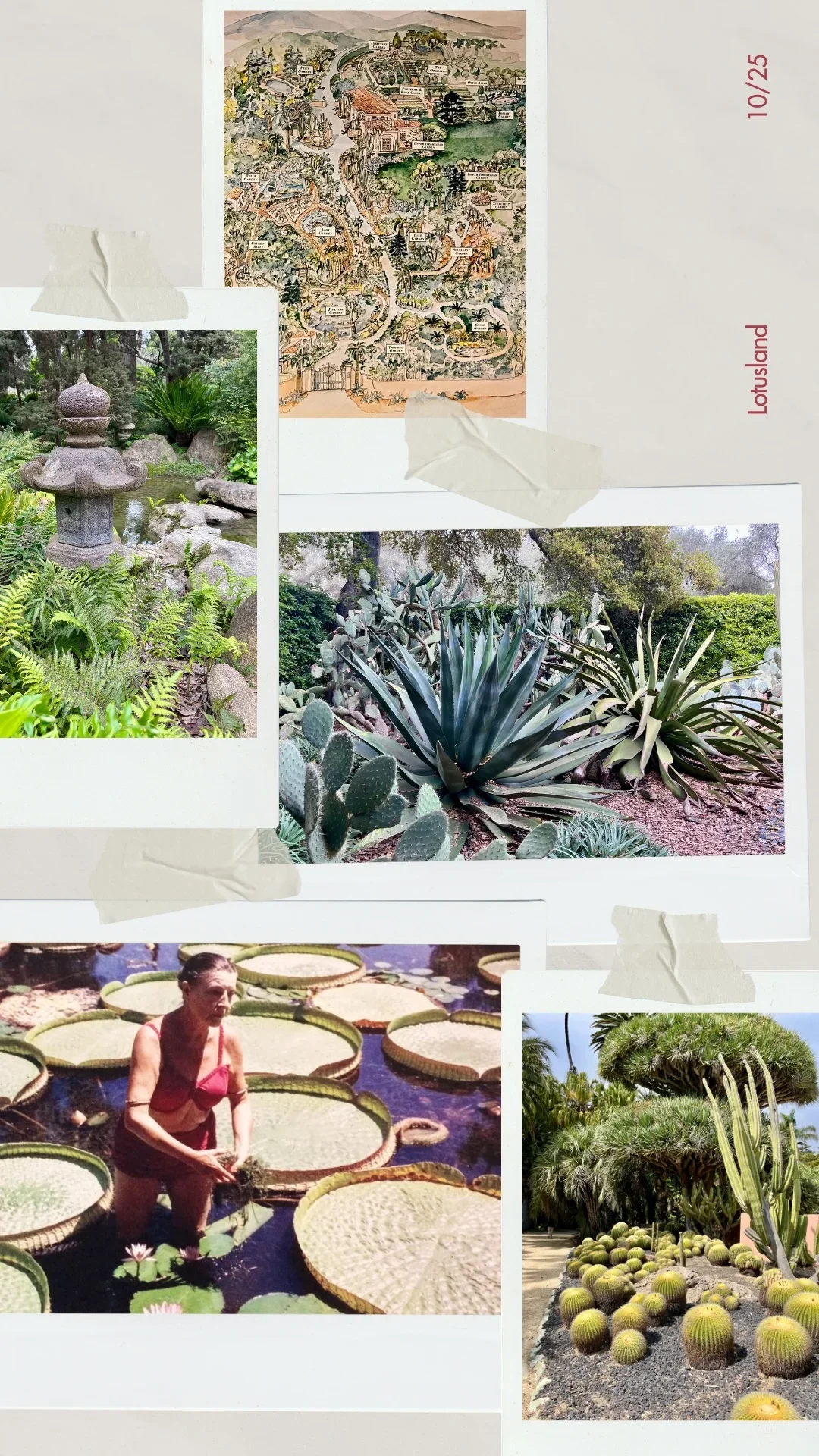
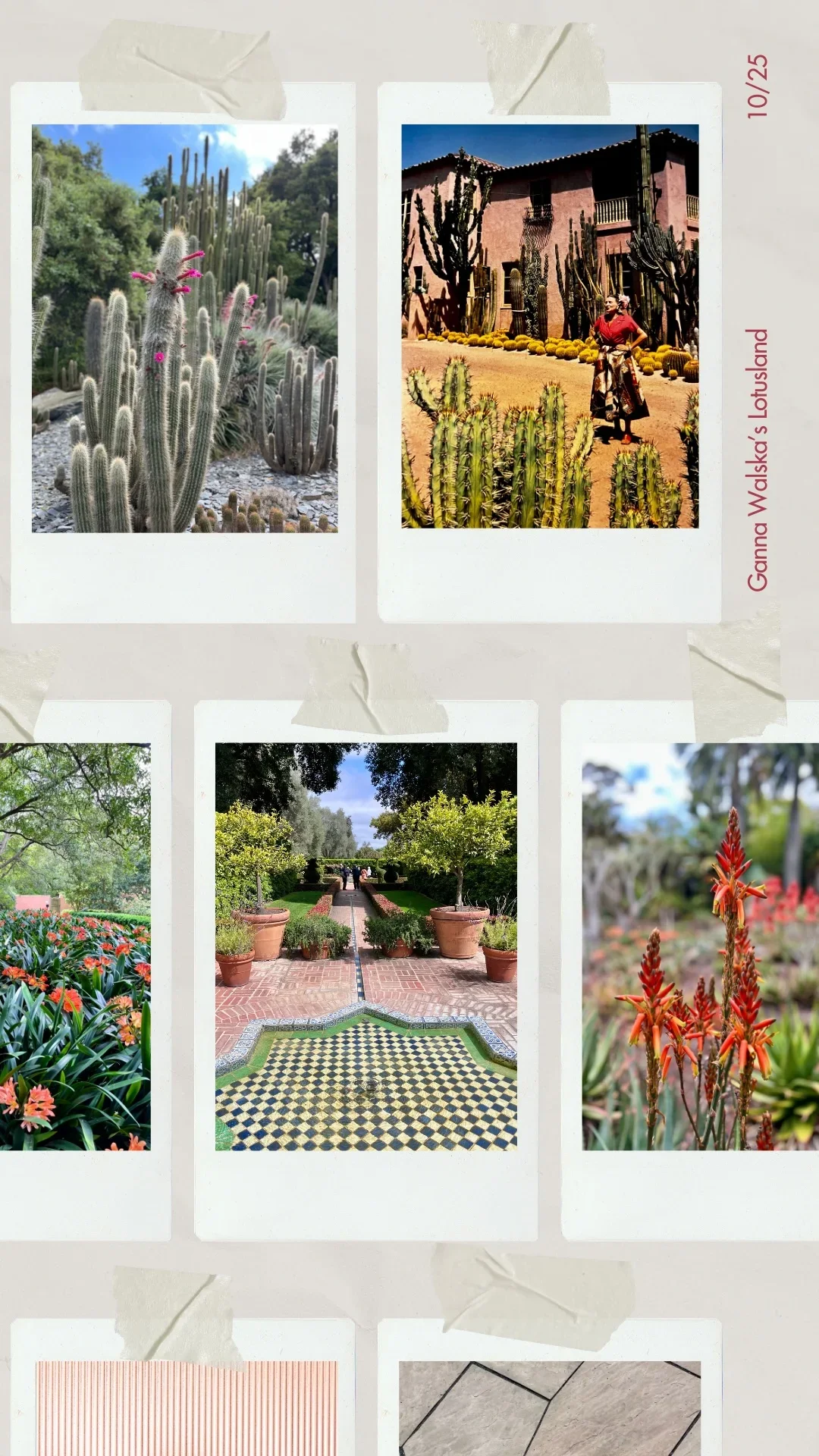
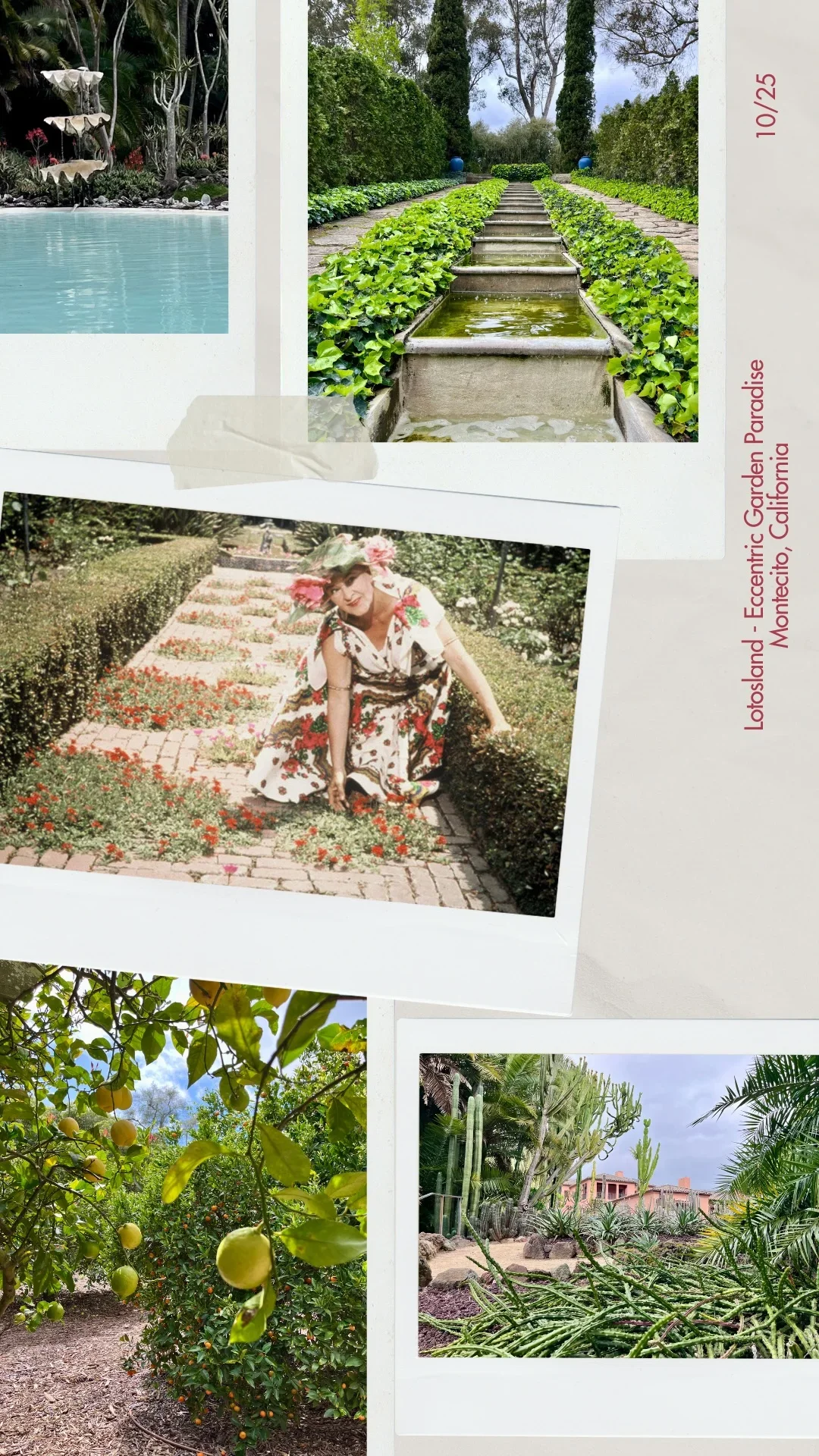
Lotusland
And now, a visual essay on an unreal place by Amanda Jeter
Thanks for the read! The Winter issue will cover bulbs, woodworking, and planting for dormancy. If you prefer to opt out, please click the link below.
THE END